

Opt out of debit and ATM overdraft coverage under Regulation E, then layer alerts, a linked backup account, and a small cushion on top. That combination stops nearly every overdraft fee you'd otherwise face. The opt-out alone won't cover checks or recurring ACH payments, which is why the layers matter, but it's the single fastest fix you can make today.
TL;DR:
- Opting out of debit and ATM overdraft coverage prevents most overdraft fees, but checks and recurring ACH payments can still trigger charges without additional protection layers.
- Linking a savings account as a backup is typically the cheapest option, while overdraft lines of credit and linked credit cards often involve fees or interest and should be used as last resorts.
- Maintaining a $100 to $200 cushion in checking and monitoring your available balance, not your ledger balance, significantly reduces the risk of overdrafts caused by holds and pending transactions.
- Moving due dates for recurring bills and establishing a dedicated buffer account for autopays help prevent fees from scheduled payments that occur before paycheck deposits.
- Using automated tools like Mali's voice alerts simplifies balance tracking and helps you act before overdraft fees occur, complementing the structural fixes like Regulation E opt-out.
Table of Contents
- How to avoid overdraft fees: 6 fastest fixes
- What does opting out under Regulation E actually stop?
- Which overdraft protection option costs the least?
- Available balance vs. ledger balance: what's the difference?
- Why do recurring autopay charges still cause overdraft fees?
- What should you do if you already got charged?
- How Mali helps you stay ahead of overdrafts automatically
- What actually stops overdraft fees, and what's overrated?
- Try Mali free and let voice alerts catch what you'd miss
- Where to verify these overdraft protections yourself
- Sources
How to avoid overdraft fees: 6 fastest fixes
You don't need a financial degree to stop overdraft fees. You need six habits, most of which take less than ten minutes to set up.
- Opt out of debit and ATM overdraft coverage through your bank's Regulation E settings, so those transactions get declined instead of charged.
- Set low-balance alerts and check your available balance daily, not the ledger balance.
- Link a savings account or line of credit as a backup transfer source.
- Keep a cushion of $100 to $200 in checking that you mentally treat as untouchable.
- Time autopay dates to land a day or two after your paycheck hits.
- Call your bank for a fee waiver the moment you get hit, and know how to dispute one that looks wrong.
Each of these closes a different gap. Skip one and you're still exposed somewhere.
What does opting out under Regulation E actually stop?
Regulation E, specifically 12 CFR § 1005.17, requires banks to get your explicit opt-in before they can charge an overdraft fee on ATM withdrawals or one-time debit card purchases. No opt-in means no fee. The transaction simply gets declined at the register or the machine.
That's the trade you're making: a declined swipe instead of a $35 charge. For most people, that's an easy trade.
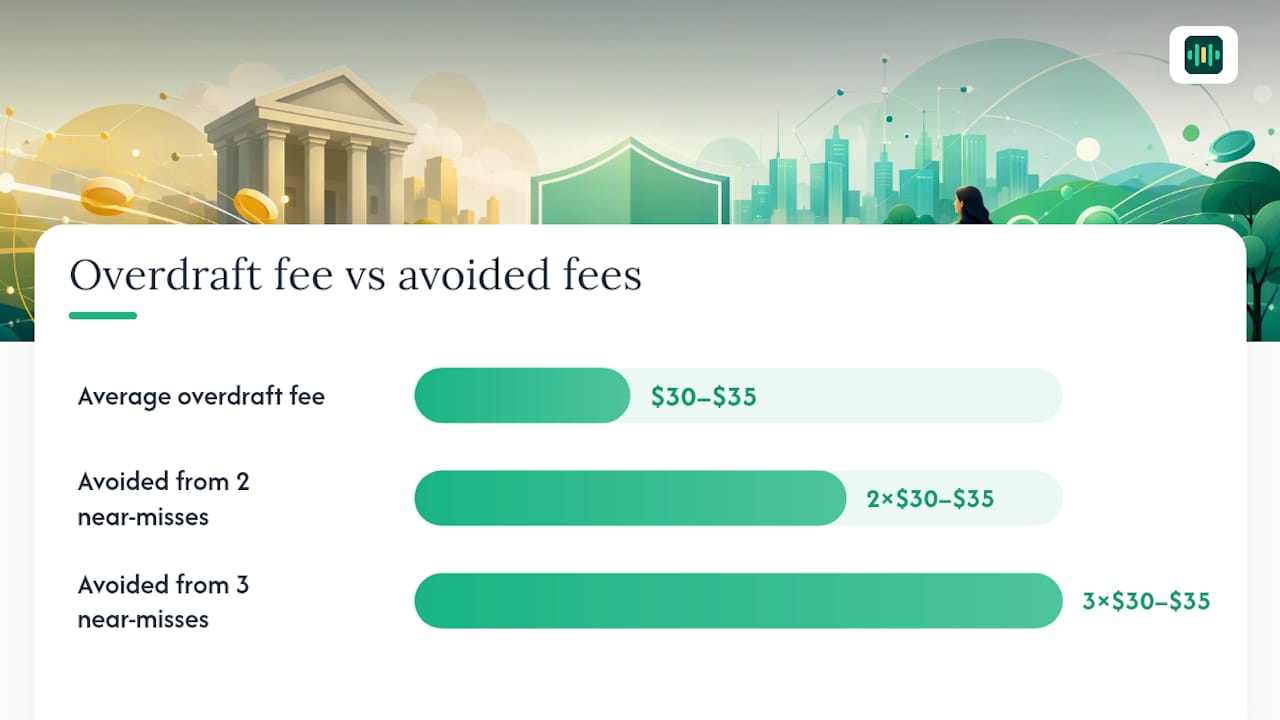
Statistic to know: overdraft fees average around $30 to $35 per transaction, and some banks will hit you with several in a single day if multiple transactions overdraw the account before you catch it.
To opt out:
- Log into your banking app and search "overdraft settings" or "overdraft opt-out."
- Call customer service and say: "I want to decline overdraft coverage for ATM and everyday debit card transactions."
- Visit a branch and ask a banker to update your Regulation E election in writing.
One catch: this opt-out doesn't touch checks or recurring ACH debits. Those can still overdraw your account and generate a fee, which is why the CFPB recommends pairing the opt-out with backup protection.
Which overdraft protection option costs the least?
Not all backup options are equal. Here's how the three common ones stack up.
- Linked savings account: usually the cheapest option. Transfers often cost nothing to a small flat fee, but it only works if the linked account actually has money in it. A CFPB comparison notes this fails as a safety net when both accounts run low at the same time.
- Overdraft line of credit: you pay interest on what you borrow instead of a flat fee, which makes sense for a short gap you'll repay in days, not months.
- Linked credit card: typically the most expensive route, often processed like a cash advance with fees and interest starting immediately. Treat it as a last resort.
Timing matters too. Transfers between accounts at the same bank often clear the same day; between institutions, it can take a business day, which is long enough to still trigger a fee if you're cutting it close.
Pro Tip: Rank your backup accounts before you need them. A quick tool like Mali's withdrawal order calculator can help you decide which account to pull from first without guessing under pressure.
Available balance vs. ledger balance: what's the difference?
Your ledger balance shows everything that's posted. Your available balance subtracts pending holds, like a gas station pre-authorization or a hotel deposit, that haven't fully settled yet. Overdrafts usually happen in that gap. You see $200 in your account, spend $150, and don't realize $75 was already held for a pending charge you forgot about.
Set alerts at two thresholds: one around $100 as an early warning, and one around $50 as a "stop spending now" signal. Most banking apps let you customize these in a few taps.
- Check your available balance, not just ledger, before any large purchase.
- Review pending transactions the day after a big spend.
- Glance at your balance the morning before autopay dates hit.
Why do recurring autopay charges still cause overdraft fees?
Opting out of debit and ATM overdraft coverage does nothing for checks or recurring ACH debits, like your electric bill, your gym membership, or a subscription. Those still get processed and can trigger a fee if the money isn't there, sometimes called a nonsufficient funds (NSF) fee rather than a traditional overdraft fee, but it stings the same way.
Fix it by moving due dates. Most billers will shift your payment date if you call and ask for it to land a day or two after your paycheck. For bills that won't budge, route them through a dedicated buffer account you top off right after payday.
- Call recurring billers and request a due-date change.
- Pause nonessential subscriptions during a tight month rather than let them fire blind.
- Keep one buffer account solely for autopay, separate from your everyday spending.
What should you do if you already got charged?
Getting hit with a fee isn't the end of the story. Move fast and you can often undo it.
- Call your bank immediately and ask for a courtesy waiver. Many banks will refund a first-time fee if you ask directly and explain it was a one-off.
- Check the posting order of your transactions. If a smaller purchase posted after a larger one and caused the overdraft, that's worth questioning.
- Look for signs of APSN processing (authorize positive, settle negative), where a transaction was approved when funds were sufficient but settled after the balance dropped. The FDIC has flagged this practice as a source of unanticipated fees.
- File a complaint with the CFPB if the fee looks erroneous or the bank won't budge, and keep screenshots of your balance history as evidence.
- Pay down the negative balance fast since extended overdraft periods can trigger additional sustained-overdraft charges on top of the original fee.
How Mali helps you stay ahead of overdrafts automatically
Manually checking balances and remembering opt-out settings works, but it takes discipline most people don't sustain past week two. Mali handles the monitoring part by linking to your accounts and talking you through what's happening in plain language instead of a dashboard full of charts.
- Mali flags a low balance and tells you out loud, then suggests a specific transfer amount from a linked backup.
- It uses calculators like the savings goal planner to help you size a realistic cushion instead of guessing.
- Every account link runs through the encrypted setup detailed on Mali's security page.
Worth knowing: the average overdraft fee still sits around $30 to $35, so even catching two or three near-misses a year through spoken alerts pays for a subscription several times over.
In your first week with Mali, ask her to check your balance trend, confirm your Regulation E opt-out status with your bank, and set a spoken alert threshold. That's usually enough to close most of the gap.
What actually stops overdraft fees, and what's overrated?
Most overdraft advice treats every tactic as equally important, and that's where it goes wrong. The Regulation E opt-out does the heaviest lifting because it's free, permanent once set, and requires zero ongoing effort. Alerts and cushions are maintenance tasks. The opt-out is a structural fix.
Where conventional advice falls short is treating "just budget better" as a solution. Budgeting doesn't stop a hold from a gas station pump or a subscription that renews on the wrong day. Structural fixes stop timing accidents; budgeting discipline alone doesn't.
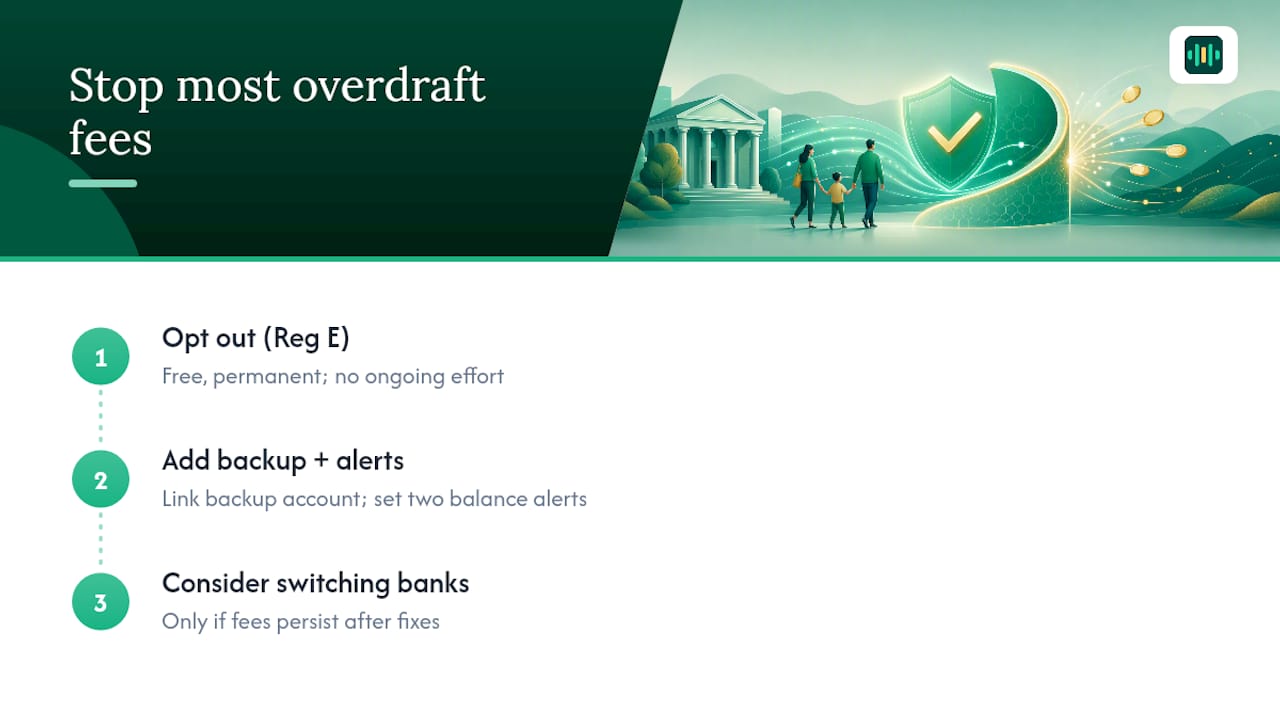
If you do one thing today, opt out. If you do a second thing this week, link a backup account and set two balance alerts. Everything else, including switching to a bank that's eliminated overdraft fees entirely, is worth considering if fees keep happening despite the first two steps. But don't skip straight to "switch banks" as your first move. It's the most disruptive option on the list, and most people never need it once the opt-out and alerts are in place.
The gap between what overdraft advice promises and what actually works comes down to this: rules beat habits when the habit depends on remembering something at the exact wrong moment. Set the rule once. Let the habit be a backup, not the plan.
— Todd
Try Mali free and let voice alerts catch what you'd miss
Alerts apps and spreadsheet trackers can flag a low balance, but you still have to open an app, read a chart, and decide what to do. Mali is the alternative to manual monitoring: you talk to her about your actual linked accounts and transactions, out loud, and she talks back with a specific next step, not a dashboard.

Starting is simple: sign up for the free trial, link your checking and savings accounts through Mali's encrypted setup on the security page, and turn on voice alerts for your balance thresholds. From there, explore the calculators page to size your cushion and emergency fund properly instead of picking a round number. Pair Mali with your bank's Regulation E opt-out and a linked backup account, and you've covered nearly every angle this article walked through. Start your free trial today and ask Mali to check your balance the moment you connect your accounts.
Where to verify these overdraft protections yourself
For the legal specifics, check the FDIC's consumer page on overdraft and account fees and the CFPB's overdraft guidance. Your own bank's overdraft disclosure, usually in your account agreement or app settings, spells out exact fee amounts and daily caps. To file a complaint, use the CFPB's complaint portal and keep screenshots of your balance history as documentation.
This article is general information, not a substitute for advice from a qualified financial advisor. Consult a qualified financial professional about your own circumstances before acting on anything here.
Sources
- Overdraft and account fees | FDIC
- How can I avoid debit card overdrafts? | CFPB
- Banks that eliminated overdraft fees | Bankrate