

Start by automating essentials and building one tiny emergency buffer. That single move cuts missed bills and impulsive overspending for most adults with ADHD, and it works better than any detailed spreadsheet. Set autopay for rent or your mortgage today, move $10 into a separate savings account, and check in once a week for five minutes. If you want a spoken assistant to walk through it with you, Mali can help you talk through the numbers instead of staring at a dashboard.
TL;DR:
- Automate essential bills and set up a small weekly transfer into a separate savings account to prevent missed payments and overdrafts.
- Use three simple budgeting buckets—essentials, committed non-essentials, and play—and avoid complicated categories to reduce decision fatigue.
- Establish weekly and monthly review rituals to quickly check accounts and adjust buckets, making budgeting a routine that requires minimal effort.
- Keep a fixed checking buffer and avoid daily fluctuations, focusing only on whether the balance drops below a set threshold to simplify oversight.
- Pair automation with voice-first check-ins, like Mali, to quickly assess available funds and reduce the friction of manual budget tracking.
Table of Contents
- A Step-by-Step Plan For Budgeting With ADHD This Week
- Which Budgeting System Actually Fits an ADHD Brain?
- Automating Bills So Nothing Slips Through
- Taming Impulsive Spending and Delayed Gratification
- Building an Emergency Buffer Without Overwhelm
- When Budgeting With ADHD Needs Professional Support
- How Mali Handles ADHD Budgeting Check-Ins
- Start Tiny, Automate, Iterate
- Try Mali For ADHD-Friendly Budgeting
- Sources
- FAQ
A Step-by-Step Plan For Budgeting With ADHD This Week
Budgeting with ADHD fails when it demands constant decisions. The fix is front-loading the thinking once, then automating so your brain never has to relitigate the same choice every Tuesday. Adults with ADHD often score lower on everyday financial skills like tracking bills and building a reserve fund, according to a study on financial knowledge and judgment in ADHD, which is exactly why a rigid, detail heavy budget usually collapses within a month.
Here's the four-step version that holds up:
- List income, then build three buckets. Write down every paycheck and side income source. Sort spending into three categories only: essentials (rent, utilities, minimum debt payments), committed non-essentials (subscriptions, gym, phone plan), and play (everything else). Skip subcategories. Three buckets are enough.
- Automate the essentials and fund a starter buffer. Set autopay for every essential bill the day after payday. Schedule a recurring transfer, even just $10 to $25 a week, into a separate account you don't touch. That account becomes your buffer against overdrafts and late fees.
- Set one rule for "available to spend." After essentials and buffer transfers clear, whatever's left in checking is yours to spend on play. No math, no running tally. If the money's there, you can spend it; if it's gone, you wait.
- Build two review rituals, not one. A 5 to 10 minute weekly check ("did anything bounce, do I have enough for the next week") and a 15 to 20 minute end-of-month audit (did the buckets need resizing, did a subscription sneak through).
Copy this into your calendar right now: "Money check, Sunday, 6:00 PM, 10 minutes." Set it to repeat weekly. That one recurring event does more for your budget than any app you'll download this year.
Which Budgeting System Actually Fits an ADHD Brain?
Most budgeting templates fail ADHD users for one reason: they demand too many decisions, too often. Zero-based budgeting, where every dollar gets assigned a job before the month starts, sounds rigorous but turns into a chore that gets abandoned by week three. That's part of why some neurodivergent budgeting guides push visual, low-decision cashflow tools instead of category-heavy spreadsheets.
Three systems that hold up better:
- Simple buckets: the three-category system above. Setup takes ten minutes; maintenance is nearly zero.
- Rolling buffer: keep a fixed cushion (say $300) in checking at all times and only worry about the balance dropping below it, ignoring day-to-day fluctuations above that line.
- One-line snapshot: a single note or spreadsheet cell updated weekly with just one number, "safe to spend this week," nothing else.
Pick based on how much weekly attention you're realistically willing to give. If the answer is "almost none," the rolling buffer wins. If comparing a zero-based method against a voice-first approach helps you decide, that contrast is worth a look before committing to either.
Pro Tip: Run whichever system you pick for 30 days before judging it. ADHD brains often abandon a method in week one because it feels unfamiliar, not because it's actually failing.
Automating Bills So Nothing Slips Through
Bill blindness, forgetting a payment exists until the late fee shows up, is one of the most common ADHD money problems, and automation solves most of it in under an hour.
- Set autopay on rent, utilities, and minimum credit card payments the same week you get this plan running.
- Add one monthly calendar reminder to glance at your accounts and confirm autopay actually fired. Automation fails silently sometimes; one check a month catches it.
- Automate a fixed weekly transfer, or round-ups on purchases, into your starter buffer and any targeted savings goal.
- Pair your bank's autopay rules with a spoken check-in tool for a quick "what cleared this week" conversation instead of digging through a transaction list.
Before linking any account to a budgeting tool, read how it handles your data. Mali's security page covers exactly what permissions get granted and how to audit them, which is worth five minutes before you connect anything.
Taming Impulsive Spending and Delayed Gratification
Adults with ADHD show measurably higher impulsive buying and a reduced ability to delay gratification than adults without ADHD, and that gap in "deferment capacity" directly predicts more impulse purchases, according to a study comparing 225 adults with and without ADHD. Improving your ability to delay a purchase, even by a day, measurably reduces how often you buy on impulse.
Tactics that actually move that needle:
- Cooling-off rules: a mandatory 24-hour wait before any non-essential purchase over a set dollar amount, or a cart-to-wishlist habit instead of instant checkout.
- Pre-funded allowances: put your "play" money on a separate prepaid card or account so overspending has a hard ceiling.
- Pre-commitment tools: gift cards for specific categories, or a savings account with a locked withdrawal window.
- Friction by design: delete saved cards from shopping sites, install a one-click checkout blocker, unsubscribe from retailer emails.
- Visual reminders: a photo of your savings goal as your phone's lock screen works as a low-effort cue toward the future payoff instead of the immediate one.
A structured challenge, like the No Spend Reset workbook, gives some people the external accountability that willpower alone doesn't.
Building an Emergency Buffer Without Overwhelm
A starter emergency fund doesn't need to be impressive. It needs to exist. A first target emergency fund that exists and can absorb a typical unexpected expense like a car repair or a missed shift gives most people enough cushion without reaching for a credit card, and building that balance quickly creates momentum that a distant larger savings goal does not.
- Automate a fixed weekly transfer, even $15 to $20, into a separate savings account.
- For windfalls (tax refunds, bonuses, gifts), try a simple 50/50 split: half to savings, half free to spend guilt-free.
- Keep the fund in an account with no debit card and a short transfer delay, so pulling money out takes a deliberate second step, not an impulsive tap.
A savings goal calculator can turn "$500 eventually" into an actual weekly dollar amount, which removes one more decision from your plate.
When Budgeting With ADHD Needs Professional Support
The stakes here are higher than "missed a payment once." Population-level research tracking Swedish adults found ADHD associated with rising default rates in midlife and linked financial distress to elevated suicide risk, which is a serious reason to bring in support early rather than waiting for a crisis, according to a population study on ADHD and financial distress.
Get help if you notice:
- Repeated collection notices or legal letters about debt
- Debt that keeps climbing despite income being adequate
- Consistent avoidance, unopened bills, unchecked balances, for weeks at a time
A financial coach or ADHD coach can build a system around how you actually think, not how a textbook says you should. Ask any candidate: "Have you worked with ADHD clients before, and what's your approach to automation versus tracking?"
How Mali Handles ADHD Budgeting Check-Ins
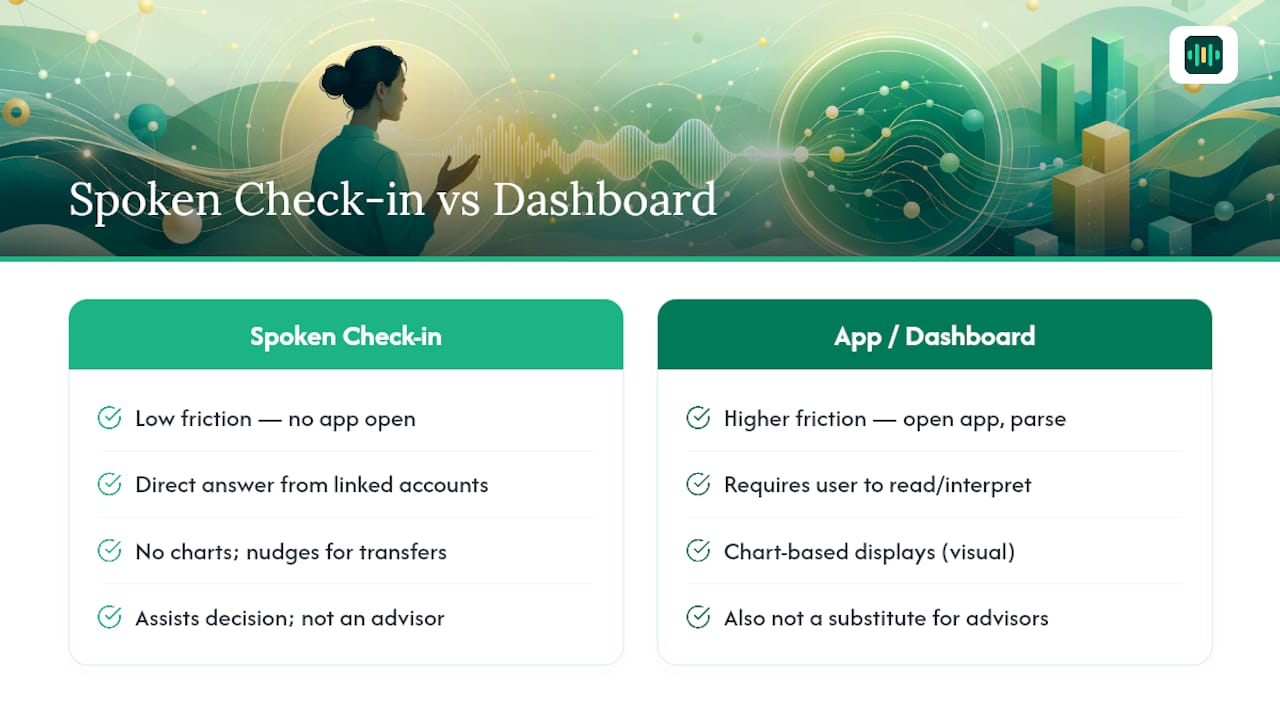
A spoken check-in removes the friction of opening an app and parsing a dashboard. Ask "what can I safely spend this week" out loud and get a straight answer pulled from your real linked accounts. Mali also nudges you when a savings transfer is due, without a chart in sight. It assists your decisions; it doesn't replace a licensed financial advisor for complex situations. One early user described finally checking her balance daily, out loud, instead of avoiding it for weeks.
Start Tiny, Automate, Iterate
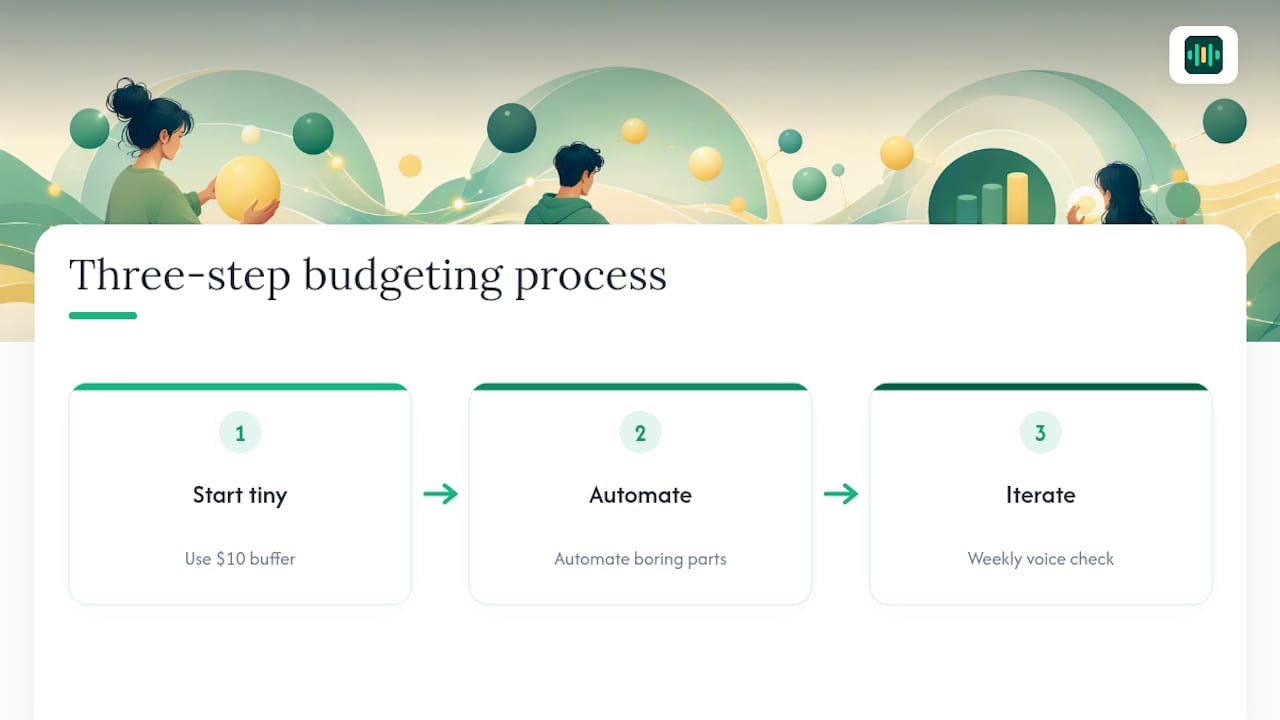
Every budgeting system in this piece will fail the moment it asks for more attention than an ADHD brain has to give on a bad day. Design for the bad days, not the good ones. The reader who succeeds isn't the one with the most detailed spreadsheet. It's the one who automated the boring parts and left the rest small enough to survive being ignored for a week.
Todd's background and reader testimonials will be added during editing.
— Todd
Try Mali For ADHD-Friendly Budgeting
Every system above depends on removing friction, and that's the one thing a voice-first assistant does that a dashboard full of charts never will. Mali is the only tool that lets you talk out loud about your actual linked bank accounts and transactions instead of typing into a form or parsing graphs, so the weekly check-in from Step 4 above takes ninety seconds, not ten minutes of scrolling.

Ask Mali "what can I safely spend this week" and get a spoken answer built from your real balances, not a generic budgeting rule. Curious how that compares to a traditional app? See how the voice-first approach stacks up against Copilot Money, then use the emergency fund calculator to turn your $500 starter goal into an exact weekly transfer amount. Mali offers a free demo tier, so you can try the conversation before you commit to anything.
FAQ
Do people with ADHD struggle with budgeting?
Yes. Adults with ADHD show measurable deficits in everyday financial skills like tracking bills and maintaining a reserve fund, according to research on financial judgment in ADHD.
What are some effective hacks for adults with ADHD managing money?
Automate essentials and savings transfers so decisions happen once, keep budgeting categories down to three, and use a spoken check-in tool like Mali instead of a manual dashboard review.
Is overspending an ADHD symptom?
Overspending itself isn't a diagnostic symptom, but impulsive buying and reduced ability to delay gratification are significantly more common in adults with ADHD, per a study of 225 adults with ADHD.
Do people with ADHD get more tired managing finances?
Decision fatigue hits harder for ADHD brains, since every unautomated bill or unclear budget category demands fresh mental effort; reducing the number of financial decisions per week directly eases that exhaustion.