

Envelope budgeting is a system where you give every dollar a job by putting money for each spending category into its own labeled envelope, physical or digital, and stopping when that envelope runs dry. It works best for people who overspend on variable costs like groceries or entertainment and need a hard visual stop instead of a vague mental limit. Set it up once a month or once per paycheck, and it starts paying off within the first cycle.
TL;DR:
- Envelope budgeting works best for variable costs but requires realistic category sizing and monthly reassessment to avoid early shortfalls.
- Digital alternatives like virtual envelopes or linked sub-accounts preserve behavioral benefits while reducing cash handling risks.
- Proper setup involves limiting categories to six to ten and using actual spending data to inform envelope amounts, not guesses.
- Inconsistencies in refilling envelopes and overspending in underfunded categories are common mistakes fixable by monitoring and adjusting allocations.
- Voice-first tools can keep envelope discipline without cash, providing real-time updates based on bank transactions and eliminating manual tracking.
Table of Contents
- What Is the Envelope Budgeting Method, and How Does It Work?
- Setting Up Envelope Budget Categories and Allocating Amounts
- Digital Envelope Alternatives and How to Use Them
- Envelope Budgeting Pros and Cons
- Common Envelope Budgeting Mistakes and How to Fix Them
- How Envelope Budgeting Fits With Zero-Based Budgeting and the 50/30/20 Rule
- Quick Monthly Envelope Budgeting Checklist
- An Honest Take on Making Envelope Budgeting Stick
- A Voice-First Way to Get Envelope Discipline Without the Cash
- Sources
- FAQ
What Is the Envelope Budgeting Method, and How Does It Work?
The mechanics are simple, and that's the whole point. You're not tracking every swipe in an app trying to remember if you're "on budget." You're looking at a stack of cash, or a number on a screen, and it's either there or it isn't.
Here's the sequence that makes it work:
- Calculate your take-home income for the month or pay period. Use the actual deposit amount, not your salary before taxes.
- List your spending categories. Start with the ones that cause the most friction: groceries, gas, dining out, entertainment, personal spending.
- Assign a dollar amount to each category based on what you've actually spent in recent months, not what you wish you'd spent.
- Withdraw cash and physically divide it into labeled envelopes, or earmark the equivalent amount digitally if you're skipping cash.
- Spend only from the matching envelope. Groceries come out of the grocery envelope. Nothing crosses over.
- Track what's left as you go, either by eyeballing the cash or checking a running total in an app.
- Refill at the start of the next cycle, carrying over any leftover or starting fresh, depending on your rule.
This is the same basic structure NerdWallet describes in its breakdown of the cash stuffing envelope budget system: create categories, stuff the envelopes, spend only from what's inside, refill each cycle.
Refill cadence matters more than people expect. If you're paid biweekly, splitting envelopes by paycheck instead of by month keeps allocations closer to your actual cash flow and reduces the odds you'll dip into next week's gas money on a Tuesday. Monthly refills work better for people with steady, single-paycheck income and fewer categories to juggle. Either way, decide the cadence before you start, not after your first shortfall.
Setting Up Envelope Budget Categories and Allocating Amounts
Category count is where most people either set themselves up to succeed or quietly guarantee they'll quit by week three. Too few categories and the envelope stops giving you useful signal; small business owners may find guidance from the Cash Flow Management Process for Small Businesses useful in adapting envelope-style thinking to their cash flow. Too many and you're managing fifteen tiny accounts instead of running a budget.
A workable starting range is six to ten categories. Broad categories like "household" hide overspending in sub-areas like cleaning supplies or pet food. Narrow categories like "coffee" and "lunch out" separately just create more envelopes to babysit. Somewhere in between, groceries, gas, dining, entertainment, personal care, and a household catch-all, tends to hold up.
- Pull three months of bank and card statements to size each envelope realistically instead of guessing.
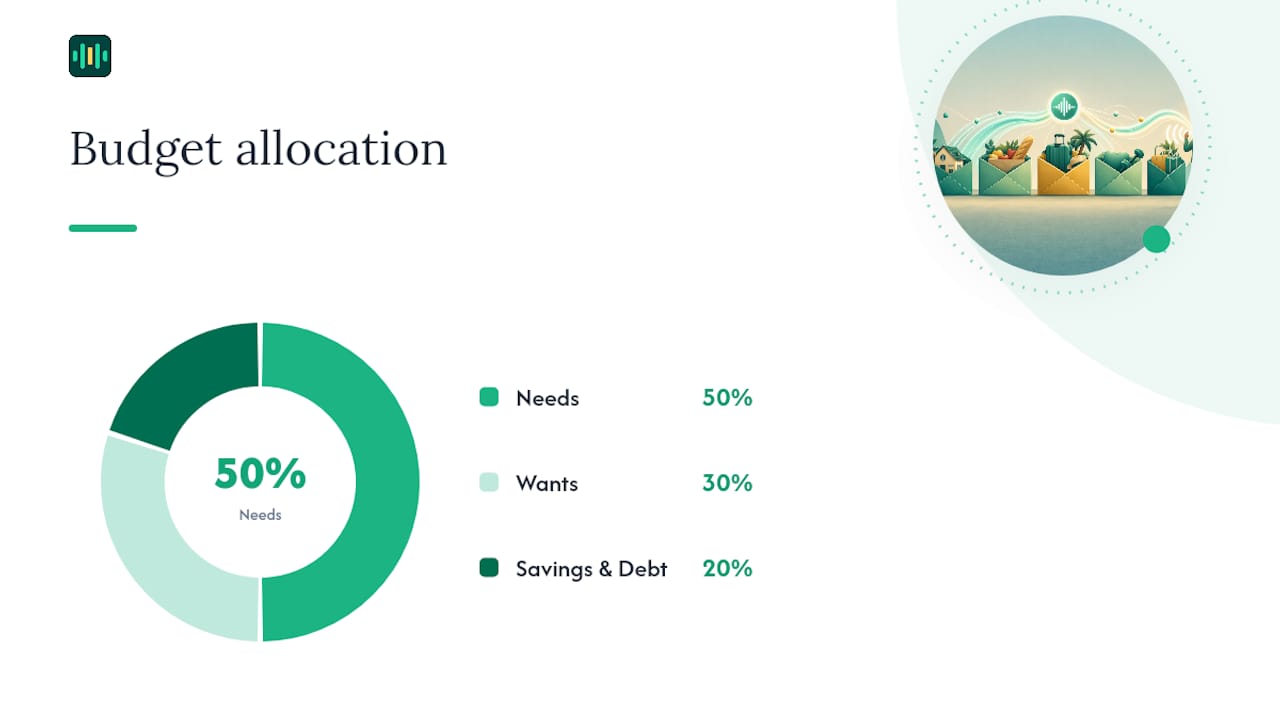
- Use the 50/30/20 rule as a rough starting split: 50% needs, 30% wants, 20% savings and debt, then break the "wants" and flexible "needs" portions into envelopes.
- Build a sinking-fund envelope for irregular costs, car registration, holiday gifts, annual subscriptions, so they don't ambush your monthly plan.
- Revisit allocations monthly rather than locking them in forever.
Pro Tip: An envelope that's empty by the 20th every single month isn't a discipline problem, it's a sizing problem. Move $30 to $50 from a category that consistently has leftovers and stop fighting the same losing month over and over.
Digital Envelope Alternatives and How to Use Them
Carrying cash isn't required to get the behavioral benefit. Capital One's guide to the envelope budget system outlines several digital paths that map closely to the physical version.
- Budgeting apps with virtual envelopes let you assign a dollar figure to each category on screen, then deduct spending automatically as transactions come in.
- Multiple sub-accounts with scheduled transfers turn your bank into the envelope drawer, moving money into separate savings or checking sub-accounts on payday.
- Spreadsheets with manual tagging work for people who want full control and don't mind a little data entry each week.
Each option trades something. Sub-accounts can trigger bank fees if you're not careful about minimums. Digital tools that route spending through a card usually preserve card rewards, something cash never does. Automation adds convenience but can also let you drift, since nothing feels as final as watching a physical stack shrink.
The fix is intentional setup: automate the transfer, but manually check the balance before big purchases. Tag every transaction the same day it happens rather than batching it weekly, since a week-old backlog of unsorted spending defeats the purpose of having categories at all.
Envelope Budgeting Pros and Cons
The method earns its reputation because it works on behavior, not just math. Deciding a dollar's job before the month starts, what researchers call intentionality, cuts down on the impulse purchases that wreck a loose budget, according to Remitly's breakdown of envelope budgeting. Seeing cash shrink in your hand creates a pause that a bank app notification rarely does.
- Pros: visual spending control, fewer impulse buys, simpler mental accounting, built-in stopping point.
- Cons: cash carries real risk (loss, theft), manual tracking takes time, and it doesn't play well with online bills or card rewards, a tradeoff Capital One flags directly in its guide to the envelope system.
It fits best for anyone drowning in variable spending categories.
Common Envelope Budgeting Mistakes and How to Fix Them
Most failures aren't about willpower. They're about setup choices that made the system harder than it needed to be.
- Creating too many envelopes. Ten categories are manageable; twenty-five become a second job. Consolidate similar categories into one.
- Ignoring your own transaction history. Guessing allocations instead of checking three months of statements sets envelopes up to run dry by the fifteenth every time.
- Refilling inconsistently. Skipping a cycle or topping off at random times breaks the rhythm that makes the system predictable.
- Treating envelopes as loans to yourself. Borrowing from next week's grocery envelope to cover this week's overspending erases the entire point of separation.
The fix is mostly structural: consolidate categories, set a recurring reminder for refill day, and keep a short receipt log if cash tracking feels fuzzy.
Pro Tip: An empty envelope before the cycle ends is data, not a moral failure. WalletHub's guide on envelope budgeting makes the same point: consistently running out early means it's time to rebalance next month's amount, not punish yourself this month.
How Envelope Budgeting Fits With Zero-Based Budgeting and the 50/30/20 Rule
Zero-based budgeting assigns every dollar of income a specific job until nothing is unaccounted for. Envelope budgeting is the execution layer for that plan. The Penny Hoarder's explainer on zero-based budgeting describes exactly this relationship: the zero-based plan decides where money goes, and envelopes physically or digitally enforce it.
From there, break the wants and flexible needs into individual envelopes.
- Fixed bills (rent, insurance, loan payments) get assigned directly in the zero-based plan, no envelope needed.
- Variable categories (groceries, gas, entertainment) get their own envelopes, sized from the 50/30/20 split or refined with actual spending data.
Quick Monthly Envelope Budgeting Checklist
Run through this every cycle, whether that's monthly or per paycheck, based on guidance from Centier's complete guide to envelope budgeting:
- Review last month's envelopes: which ran dry early, which had leftovers.
- Adjust category amounts based on that data.
- Prepare cash or schedule digital transfers right after payday.
- Set a calendar reminder for your next review date.
- Decide your carryover rule: leftover cash gets saved, rolled forward, or pushed toward a specific goal like an emergency fund or a savings target.
An Honest Take on Making Envelope Budgeting Stick
The people who stick with this long term aren't the ones with the strictest rules. They're the ones who treat the envelope amounts as a living guess, wrong the first month, closer the second, dialed in by the third. Rigid budgets break the first time life throws a surprise car repair at you. Flexible ones bend and keep going.
— Todd
A Voice-First Way to Get Envelope Discipline Without the Cash
Malimoney gives you the envelope mindset, dollar amounts tied to real categories, without the drawer full of cash or the sub-account juggling. Since Mali links directly to your real bank accounts, you can just ask out loud how much is left in your "dining out" envelope this week, and she answers based on your actual transactions instead of a guess.

That's the piece no budgeting app or spreadsheet offers: a voice you actually talk to about your money, not a dashboard you have to interpret yourself. No other site lets you talk to an AI about your own bank accounts and transactions with a distinct voice-first AI experience. She reads your real spending and income, spots where you're falling short in a category, and tells you in plain spoken language, not a wall of charts. It's a secure, read-only connection to your accounts, and Mali doesn't sell your data or push commission-based advice.
If you're transitioning from physical envelopes or a spreadsheet and want something that keeps the discipline but drops the manual tracking, start with Mali's account linking or try the free financial calculators first to see how the numbers behind your envelopes actually shake out.
Sources
- What Is the Cash Stuffing Envelope Budget System? - NerdWallet
- How to Use the Envelope Budget System | Capital One
- Zero-Based Budgeting: The Complete Guide - The Penny Hoarder
- Envelope budgeting - WalletHub
FAQ
What Is a Disadvantage of Envelope Budgeting?
The biggest disadvantage is friction with modern money habits: cash doesn't work for online bills, autopay, or card rewards program. Capital One also notes the practical risk of carrying cash, since lost or stolen envelopes mean lost money with no recovery option.
What Is Dave Ramsey's Envelope Method for Budgeting?
Dave Ramsey's version follows the same core cash-stuffing structure: withdraw your paycheck, divide it into labeled envelopes for categories like groceries and gas, and stop spending in that category once the envelope is empty. It's built as a tactic within a broader zero-based budget where every dollar has an assigned job.
How Can I Save $5,000 in 3 Months Using the Envelope Method?
There's no verified single formula tied specifically to this amount in three months. The realistic approach is reverse-engineering a total target by dividing it by your pay periods over three months, treating that number as a dedicated savings envelope, and cutting variable categories like dining or entertainment to free up the difference. A tool like the savings goal calculator can help size a monthly target based on your actual income.
What Is the 70/20/10 Money Rule?
The 70/20/10 rule splits income into 70% for living expenses, 20% for savings, and 10% for debt payoff or giving, a simpler alternative to 50/30/20 for people who want fewer categories to manage. Either heuristic works as a starting point before you refine envelope amounts using real spending data.
Can Malimoney Replace Physical Envelopes?
Malimoney isn't a virtual envelope app in the traditional sense, but it gives you the same category awareness by reading your real bank data and telling you out loud where you're overspending. Pricing details are available directly on the Malimoney accounts page.