

Payment history and credit utilization drive nearly two thirds of your FICO Score, so those are the two levers worth pulling first. Start fixing any reporting errors, bringing late accounts current, and paying down the cards closest to their limits, or asking for a higher limit if a payoff isn't possible right now. Expect real movement in 30 to 90 days for most fixes; a jump of 50 to 100 points in a single month is rare and usually only happens when a major error gets deleted.
TL;DR:
- Disputing material errors and bringing past-due accounts current can produce noticeable score improvements within 30 to 90 days.
- Keeping credit utilization below 30 percent, ideally under 10 percent, is the fastest way to see a significant increase in your score.
- Major credit score jumps of 50 to 100 points in one month are rare and usually require correcting a severe reporting mistake or dramatically reducing high utilization.
- Monitoring statement closing dates and using payoff calculators helps optimize how and when balances are paid to improve credit faster.
- Promises of overnight score fixes or guaranteed increases are false, and avoiding paid credit repair services with vague guarantees is essential.
Table of Contents
- How Do You Improve Your Credit Score This Month?
- What Actually Moves the Needle: Payment History, Utilization, and Disputes
- How Long Does It Take for Credit Score Changes to Show Up?
- Tools That Turn a Checklist Into a Schedule
- Which Credit Repair Promises Are Scams?
- Mali's Take on Fixing Your Score Without the Guesswork
- Turn This Guide Into a Payoff Plan This Week
- Where to Verify This and Get Official Help
- Sources
How Do You Improve Your Credit Score This Month?
You don't need twenty tactics. You need the right five, done in order.
- Pull all three reports. Get them free at AnnualCreditReport.com and scan for accounts you don't recognize, late payments that never happened, or balances that look wrong.
- Dispute anything material. File with the bureau reporting the error, not just the creditor. Bureaus generally have to investigate and respond within about 30 days, so a clean dispute can move your score faster than almost anything else on this list.
- Bring past-due accounts current. Call the creditor directly if you're behind. Getting current stops new damage even if the old late mark stays on the report for now.
- Attack utilization on your worst card first, not the one with the highest balance in dollars. The card closest to its limit is doing the most damage per dollar owed.
- Ask for a credit limit increase or add yourself as an authorized user on a family member's older, well-managed card. Then turn on autopay so this list never repeats itself.
Call your creditor when you need a payment plan or a due-date change. File a dispute with the bureau when the problem is factual, a wrong balance, an account that isn't yours, a payment marked late when it wasn't.
Pro Tip: Pay down your card balance before the statement closing date, not just the due date. Card issuers report the balance as of the statement date, so a payment made two days before it closes can drop your reported utilization a full billing cycle sooner.
What Actually Moves the Needle: Payment History, Utilization, and Disputes
Two factors decide most of your score, and neither one is a mystery.
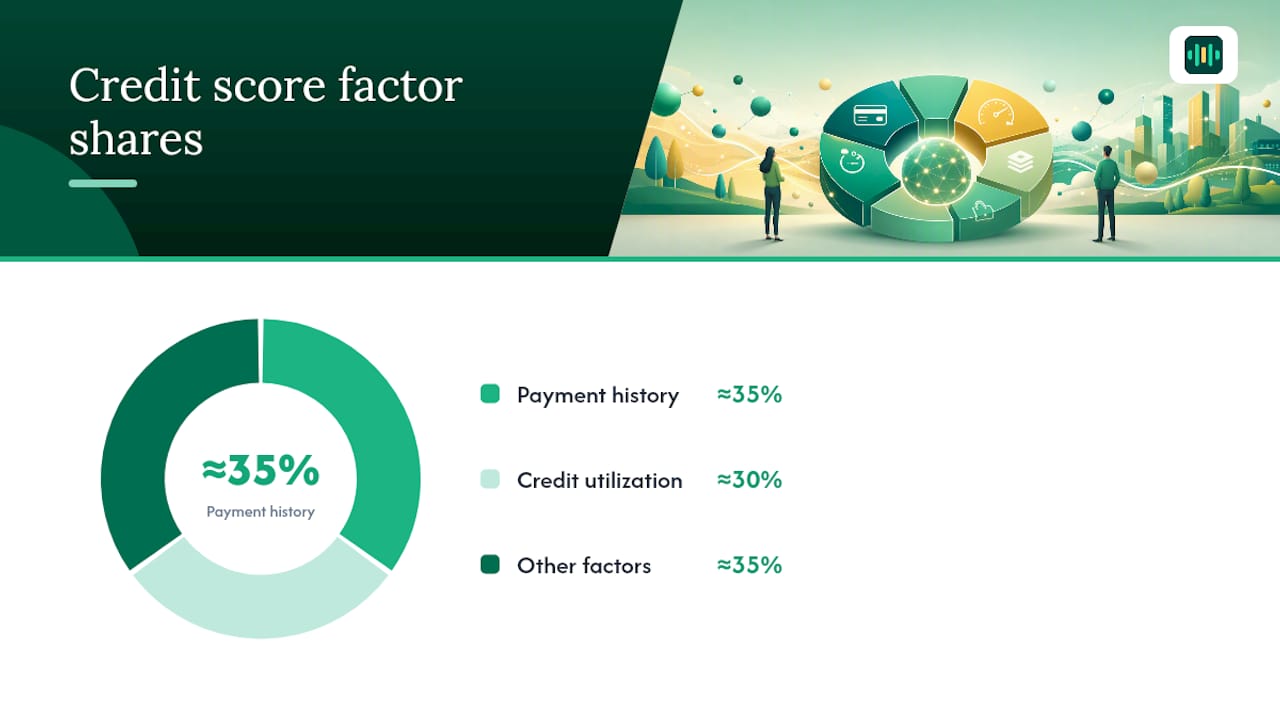
Payment history is a significant portion of your FICO Score, the single heaviest factor. A payment that's 30 or more days late gets reported to the bureaus and can knock a healthy score down sharply, and it stays visible for up to seven years. The good news: once you're current, the damage stops compounding. Lenders weigh recent behavior more heavily than an old blemish, so eighteen months of on-time payments does real work even with a late mark still sitting on the report.
Credit utilization is roughly 30% of the score, and it's the fastest lever you control. Keeping overall utilization under 30%, and ideally under 10%, tends to produce the quickest visible gains of any single action. Utilization is calculated both per card and across all your cards combined, so one maxed-out card can drag your score down even if every other account sits at zero.
Together, payment history and utilization account for 65% of your score, which is exactly why they top every list here.
Disputes matter more than people give them credit for. If you find an account that isn't yours, a duplicate collection, or a payment marked late in error, file directly with the bureau reporting it. Keep your statements, receipts, and dates organized, because bureaus must generally investigate within 30 days under federal law, and a successful correction can lift your score noticeably once it processes.
If your file is thin, a secured card or credit-builder loan builds payment history over 6 to 24 months. Becoming an authorized user on someone else's seasoned account can help almost immediately, but only if that person pays on time. Their mistakes become your problem too.
New credit applications trigger hard inquiries, which cause a small, temporary dip. Rate-shopping for a mortgage or auto loan within a focused window, usually 14 to 45 days depending on the scoring model, counts as one inquiry rather than several, so don't let inquiry anxiety stop you from comparing loan offers.
How Long Does It Take for Credit Score Changes to Show Up?
Nothing here happens instantly, but some things happen faster than people expect.
- 30 to 60 days: Corrected errors post, lower balances from a pre-statement payment reflect, and bill-reporting services can add positive utility or rent payment history to your file. Authorized-user additions often show up in this window too.
- 90 to 180 days: A steady run of on-time payments starts pulling your average payment behavior up and softens the weight of older negative marks.
- 6 to 12+ months: Recovery from a collection or charge-off, and rebuilding your average account age after opening new credit, both take real time.
A triple-digit jump within a single month is unusual for most people. The exceptions are specific: a major reporting error gets deleted, or someone carrying extremely high utilization pays it down dramatically in one billing cycle. Outside of those two scenarios, treat any promise of an overnight fix as a red flag rather than a strategy.
Tools That Turn a Checklist Into a Schedule
A list of good intentions doesn't pay anything down. A schedule does.
- Pull your free reports at AnnualCreditReport.com and check them every few months, not just once, since errors can reappear.
- Know your statement closing date for each card. That date, not the due date, decides what gets reported to the bureaus.
- Run your balances through a Credit Card Payoff calculator to see which card to attack first for the fastest utilization drop, rather than guessing based on which balance feels biggest.
- Use connected account tools to track utilization automatically instead of checking manually every week.
Which Credit Repair Promises Are Scams?
If someone guarantees a specific point increase by a specific date, walk away. No legitimate company controls how FICO's formula scores your file.
- Red flags: upfront payment demands to remove accurate negative items, pressure to sign a long contract before any work is done, or promises of a "new credit identity" using an EIN instead of your Social Security number.
- Closing a card usually backfires. It can shrink your total available credit and instantly raise your utilization ratio. It's sometimes worth it for a card with a steep annual fee you can't justify, but weigh that against the utilization hit first.
- Authorized-user and rent-reporting tools help thin files, but they carry real risk. A primary cardholder who misses payments or maxes out the card drags your score down right along with theirs.
- Skip paid credit-repair firms with vague guarantees. A nonprofit credit counselor offers the same dispute guidance for little or no cost.
Mali's Take on Fixing Your Score Without the Guesswork
Most credit advice tells you what to do but not what order to do it in. That's the gap Mali tries to close. When you connect your accounts, Mali can flag which card's utilization is quietly costing you the most points and turn that into an actual payoff schedule instead of a vague resolution. The math behind prioritization isn't complicated. Knowing which balance to hit first, and when your statement closes, consistently is. That's where a connected calculator earns its keep over a spreadsheet you'll abandon in three weeks.
— Todd
Turn This Guide Into a Payoff Plan This Week
Reading about utilization and payment history is one thing. Actually mapping out which card to pay down first, and when it'll show up on your report, is another. Malimoney's free calculators exist for exactly that gap.

Start with the Credit Card Payoff calculator to model paying your highest-utilization card down to 10% and see how many months that takes at different payment amounts. If a job loss or emergency is part of what got your balances high in the first place, the Emergency Fund calculator helps you figure out a cushion so you're not right back here in a year. Once your score starts climbing, the Net Worth calculator tracks whether your overall finances are actually improving, not just the number on your credit report.
| This week | Tool | What you'll know |
|---|---|---|
| Pick your priority card | Credit Card Payoff calculator | Months to reach 10% utilization |
| Build a safety cushion | Emergency Fund calculator | Target savings amount |
| Track overall progress | Net Worth calculator | Whether your finances are trending up |
Connect your accounts and let Mali turn this checklist into dates on a calendar.
Where to Verify This and Get Official Help
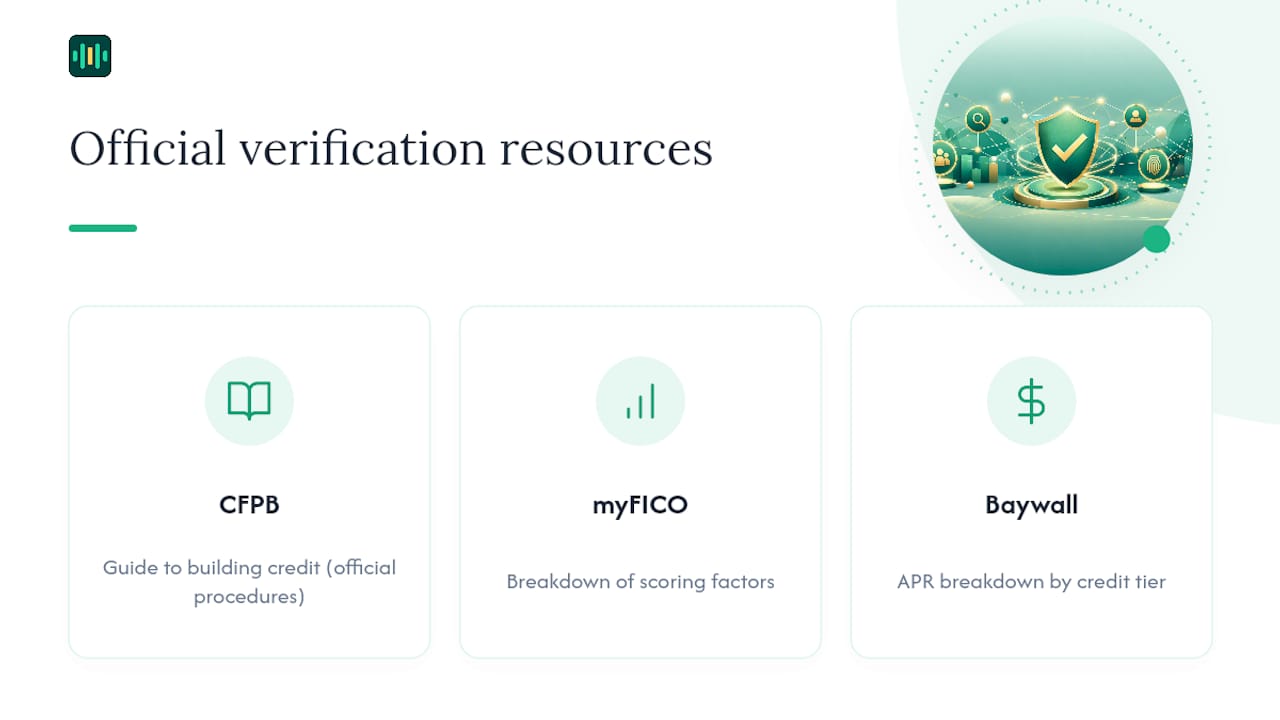
For dispute procedures and score mechanics straight from the source, check the CFPB's guide to building credit, myFICO's breakdown of scoring factors, and Usa. If you're weighing how a specific score affects loan pricing, Baywall's breakdown of APRs by credit tier is worth a look before you apply for financing.
Sources
- How do I get and keep a good credit score? | CFPB
- How to repair your credit and improve your FICO® Score | myFICO
- Usa