

Living paycheck to paycheck means your income covers your bills with little or nothing left over, so a missed shift, a late invoice, or a surprise expense can knock your finances off balance. It affects renters and six-figure earners alike, not just people below the poverty line. The first move is not a budget overhaul. It's tracking your last 30 days of deposits and outflows, or setting up one small automatic transfer on your next payday, so you can see exactly where the gap is before you try to close it.
TL;DR:
- More than half of Americans live paycheck to paycheck, with nearly 90% having less than $500 left after expenses each month.
- Tracking recent deposits and outflows helps identify the specific gap in your finances before trying to reduce expenses or increase income.
- Building a $500 to $1,000 emergency fund through small automatic transfers reduces immediate financial risk from missed paychecks or unexpected costs.
- Automating small savings, negotiating bills, and choosing a targeted debt payoff strategy can help break the cycle within 90 days.
- For those with almost no margin, prioritizing fixed costs, automating savings, and adding income directly addresses the core cash flow issues.
Table of Contents
- What Are the Signs You're Living Paycheck to Paycheck?
- How Many Americans Are Living Paycheck to Paycheck?
- Why Does Living Paycheck to Paycheck Happen?
- How Do You Stop Living Paycheck to Paycheck in 90 Days?
- How Should You Budget When You Have Almost No Margin?
- What Tools Actually Speed Up the Process?
- Author Perspective: Small Wins and Realistic Timelines
- Talk to Mali About Your Money Instead of Guessing
- Sources
- FAQ
What Are the Signs You're Living Paycheck to Paycheck?
The clearest signs show up in your bank account before they show up in your mood. Watch for these patterns over a normal month:
- Your checking balance regularly hits zero, or dips negative, a few days before payday.
- You've paid an overdraft fee or a late fee more than once in the last six months.
- You put groceries, gas, or utility bills on a credit card because cash ran out first.
- You've delayed a bill, skipped a prescription, or pushed off a doctor's visit to make rent.
There's a real difference between doing this by necessity and doing it by choice. If your income barely covers fixed costs, your priority is raising income or cutting fixed costs. If you're stretched because of discretionary spending, the fix is closer to a budgeting reset than an income problem. Knowing which camp you're in changes which step in this guide you tackle first.
How Many Americans Are Living Paycheck to Paycheck?
The number depends on who's asking, but every recent measure points to the same uncomfortable range: a large minority to a clear majority of U.S. adults.
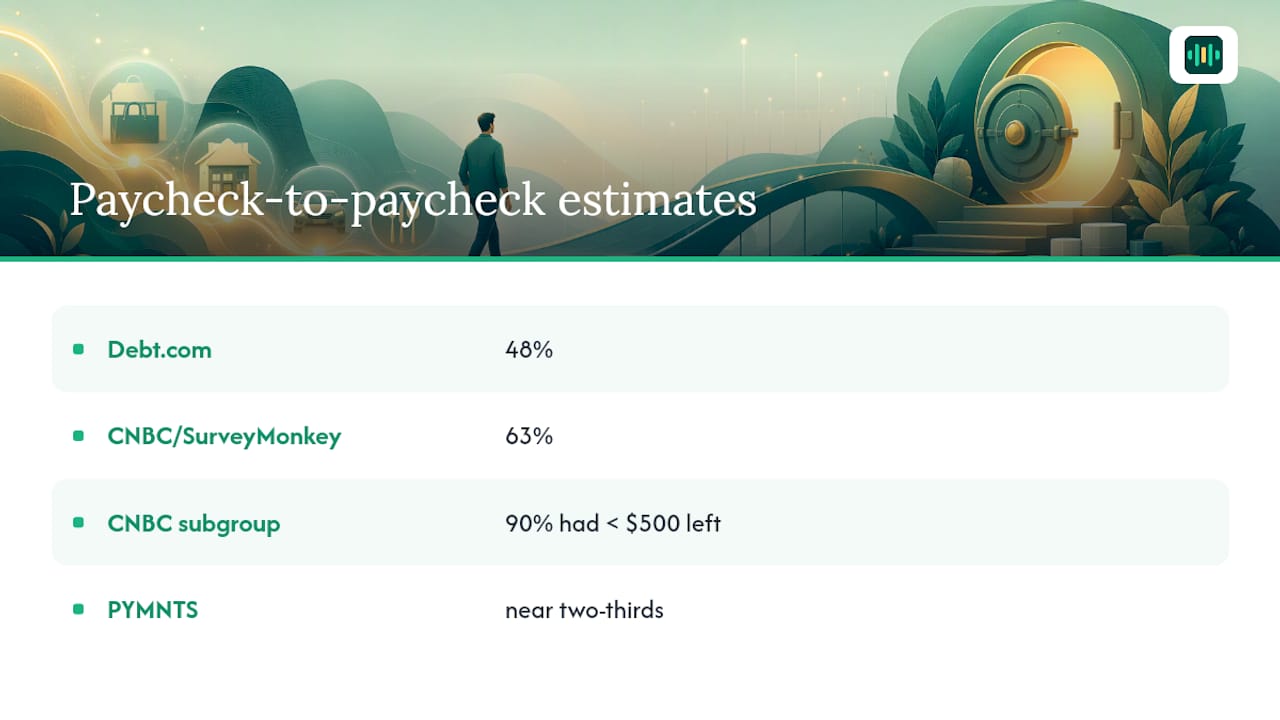
63% of Americans said they were living paycheck to paycheck, according to the CNBC and SurveyMonkey Quarterly Money Survey on affordability. Roughly 90% of that group had less than $500 left over each month after expenses, which leaves almost no room for a car repair or a dental bill.
Debt.com's own 2026 survey found a lower figure, 48% of Americans, reporting the same struggle. The gap between the two surveys matters less than what they agree on: nearly half of Americans, at minimum, are one missed paycheck from real trouble. PYMNTS puts its own estimate near two-thirds and notes the condition cuts across income bands, hitting families with dependents and workers with fragmented pay schedules hardest.
Why Does Living Paycheck to Paycheck Happen?
Rent, groceries, insurance, and utilities don't flex when your income does. That's the "sticky necessity" problem. Prices on essentials tend to stay elevated even after inflation cools, so a budget built two years ago no longer matches today's costs.
Pay itself has also become less predictable. More workers now earn through gig platforms, tips, or multiple part-time jobs instead of one steady salary, and PYMNTS calls this income fragmentation one of the biggest drivers of the paycheck-to-paycheck cycle. When deposits land on irregular days but bills are due on fixed ones, you get overdrafts and late fees purely from timing, not overspending. Nearly 44% of people in the CNBC/SurveyMonkey survey reported exactly this: a late fee or overdraft charge tied to waiting on pay.
Debt servicing adds another layer. Minimum payments on credit cards or personal loans eat into cash flow before you ever get to discretionary spending. The honest question to ask yourself is whether a specific expense is a necessity you can't shrink, or a lifestyle choice you're not ready to admit is optional. That distinction decides which lever in the next section you pull first.
How Do You Stop Living Paycheck to Paycheck in 90 Days?
Breaking the paycheck to paycheck cycle doesn't require a full financial overhaul in week one. It requires a sequence. Here's the order that produces results fastest, based on which moves reduce immediate risk before tackling longer-term goals.
- Run a 30-day cash-flow triage. Pull up your last month of transactions and separate needs from wants. Most people find at least three recurring charges they forgot they were paying for.
- Align your budget to your actual pay dates. If you get paid biweekly but rent is due on the 1st, build a simple calendar matching income dates to bill due dates instead of a generic monthly budget.
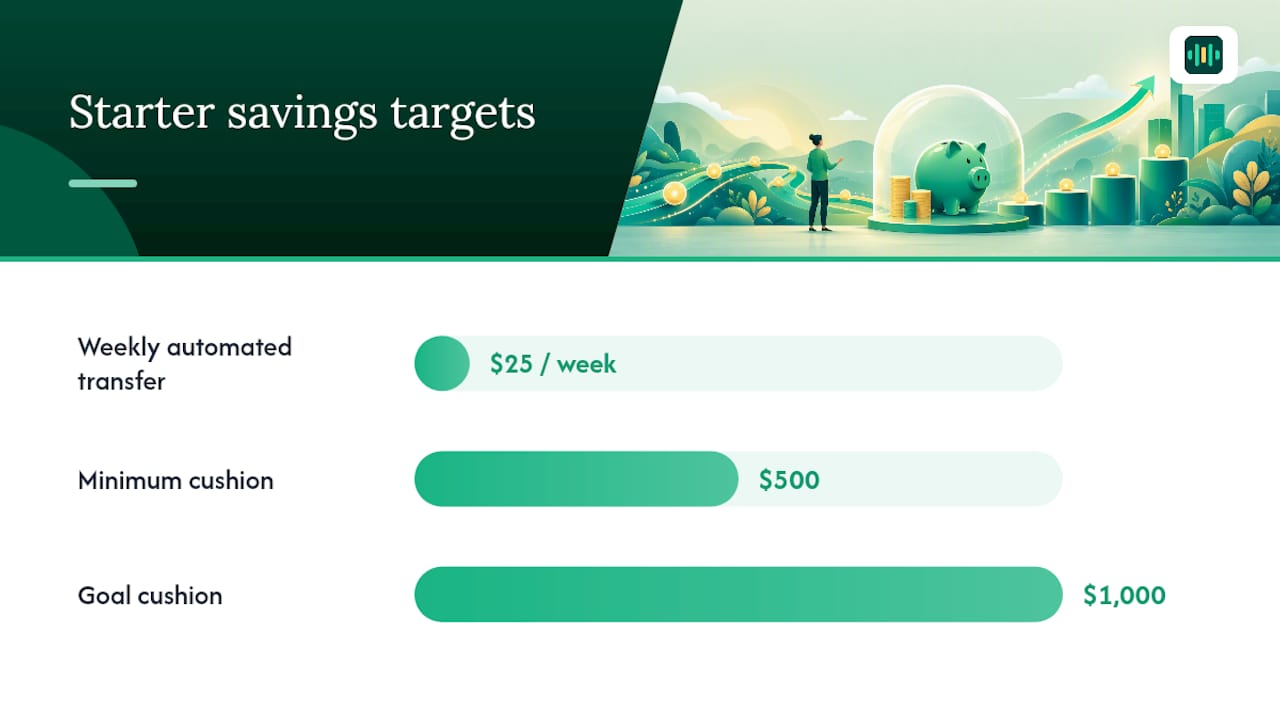
- Automate a starter emergency cushion of $500 to $1,000 by creating an emergency plan for family to keep important financial documents accessible and prepare for unexpected events. This single move prevents most overdraft fees and one missed paycheck from becoming a crisis. A small recurring transfer of even $25 a week gets you there in a matter of months.
- Cancel or pause at least one subscription and negotiate one bill this month. Call your internet or insurance provider and ask for a lower rate. Most companies have retention discounts they won't offer unless you ask.
- Pick one debt payoff method and stick with it. The snowball method (smallest balance first) builds momentum; the avalanche method (highest interest first) saves more money. Be cautious with balance-transfer cards. The 0% intro rate often reverts to a high rate after 12 to 18 months.
- Add income sized to your actual shortfall, not a vague "side hustle" goal. If you're short $300 a month, that might mean four hours of weekend gig work, a specific freelance skill, or simply asking your employer about overtime or a raise.
Pro Tip: Don't try all six steps in week one. Automate the emergency cushion transfer first, since it runs in the background while you handle the rest.
Check in weekly on your account balance and monthly on total debt and cushion progress. Momentum, not perfection, is what gets you out.
How Should You Budget When You Have Almost No Margin?
The 70/20/10 rule splits take-home pay into 70% living expenses, 20% savings and investments, and 10% debt repayment or giving. It's a clean framework, but it assumes you have room to spare in the first place.
If your necessities already eat 85% or 90% of your paycheck, forcing a 70/20/10 split just sets you up to fail the plan in week two. Chase's own guidance on the rule acknowledges this: percentage-based budgets can mislead when needs and wants get lumped together, and recommends tracking actual cash flow before applying rigid ratios.
A more honest version for tight margins reorders the priorities instead of the percentages: cover fixed necessities first, automate whatever small savings amount is realistic (even 2% or 5%), then apply anything left to debt. Someone earning $2,800 a month with $2,400 in fixed costs doesn't have a 20% savings tier available. They have $400, and the job is deciding how much of that goes to a cushion versus a card balance, not forcing a formula that doesn't fit their numbers.
What Tools Actually Speed Up the Process?
Running the numbers by hand is where most people give up. A few specific calculators cut that time down to minutes: an emergency fund calculator to size your starter cushion, a credit card payoff calculator to compare snowball versus avalanche timelines, and a savings goal calculator to turn a target number into a monthly transfer amount.
- Emergency fund sizing, based on your real monthly expenses, not a generic three-month rule.
- Debt payoff comparisons showing exact months and interest saved under each method.
- Monthly savings targets translated from a lump-sum goal into an automated transfer.
Bank-linked tools that read your actual transaction history can shorten this diagnosis dramatically, flagging specific subscriptions to pause or bills worth renegotiating instead of leaving you to hunt through statements. A voice-first interface removes another barrier entirely: you talk through what's happening with your money instead of wrestling with spreadsheets or dashboards full of charts, which matters most for people who avoid budgeting apps because they feel like homework.
Author Perspective: Small Wins and Realistic Timelines
Progress here looks unglamorous. At 30 days, expect a clearer picture, not a fatter bank account. At 90 days, expect a real cushion and one fewer bad habit. At 180 days, expect the anxiety to fade because you've built a system, not because you got lucky. Automate one transfer this week. That's the whole start.
— Todd
Talk to Mali About Your Money Instead of Guessing
Mali is a voice-first AI financial companion. You link your bank accounts and talk to her out loud about what's actually happening with your money. No other financial app lets you have a real spoken conversation about your own transactions instead of staring at a dashboard of charts.

Inside the app, three moves are worth doing this week: run the emergency fund calculator to see your exact starter cushion target, run the credit card payoff calculator to compare debt strategies, and ask Mali directly for three specific spending cuts based on your real transaction history rather than a generic list. Recommendations can be sized to your financial shortfall rather than a one-size-fits-all percentage rule. Consider starting a trial to explore personalized financial guidance.
This article is general information, not a substitute for advice from a qualified financial advisor. Consult a qualified financial professional about your own circumstances before acting on anything here.
Sources
- CNBC and SurveyMonkey Quarterly Money Survey: Affordability (July 2026)
- The American Paycheck, 2026 annual edition — PYMNTS
- 70-20-10 budget rule — Chase
- Debt
FAQ
Is It Normal to Be Living Paycheck to Paycheck?
Yes, in the sense that it's extremely common. Estimates range from 48% to as high as two-thirds of American adults, according to Debt.com and PYMNTS. Common doesn't mean permanent. It's a cash-flow pattern you can change with a sequenced plan.
What Is the 70/20/10 Rule for Money?
The 70/20/10 rule allocates 70% of take-home pay to living expenses, 20% to savings and investments, and 10% to debt repayment or giving. It works best once your fixed necessities take up less than 70% of your income; below that margin, prioritize cash-flow stability before forcing the percentages.
What Percent of People Earning $100,000 Live Paycheck to Paycheck?
Higher earners are not immune to this pattern, since lifestyle spending and debt payments can absorb a large paycheck just as easily as a small one. Surveys consistently show a meaningful share of six-figure earners report living paycheck to paycheck, according to NerdWallet's analysis, often while still contributing to retirement accounts.
How Do I Stop Living Paycheck to Paycheck?
Start with a 30-day cash-flow triage to find your actual gap, then automate a $500 to $1,000 starter emergency cushion so one bad week doesn't wipe you out. From there, cut or negotiate at least one recurring bill, pick a debt payoff method, and add income sized specifically to your shortfall rather than a vague side-hustle goal.